What Happens When You Send a WhatsApp Message?
You tap “Send” — and in less than a second, your friend on the other side of the world reads it. But what actually happened in that 1 second? Let’s find out!
🤔 Ever Wondered This?
You type “Hey!” on your phone in Karachi. Your friend in London reads it instantly. That message traveled thousands of kilometers — through invisible cables, giant computers, and secret codes — all in under 1 second.
This article breaks it all down — step by step, no confusing words (and when we use a technical word, just click on it to understand it immediately!).
You Type Your Message & Hit Send
The moment you tap the green “Send” button, a LOT of invisible work begins. Your phone doesn’t just throw your message into the air — it first wraps it in a digital envelope.
Think of it like sending a letter. You write your words, put them in an envelope, write the address on it, then give it to the post office. Your phone does all of this — but in milliseconds. A millisecond = 1/1000th of a second. So fast you can’t feel it.
Your phone also checks a few things before sending:
Via WiFi or mobile data — your phone checks this first. No connection = message doesn’t go anywhere yet. It waits.
WhatsApp immediately scrambles your message into a secret code before it even leaves your phone. More on this in Step 3!
Your message gets broken into tiny pieces called packets📦 Packets are tiny chunks of data. Big messages are cut into small pieces for faster travel, then reassembled on the other end. — like cutting a pizza into slices so it fits in the box.
Your Message Travels Through the Internet 🌐
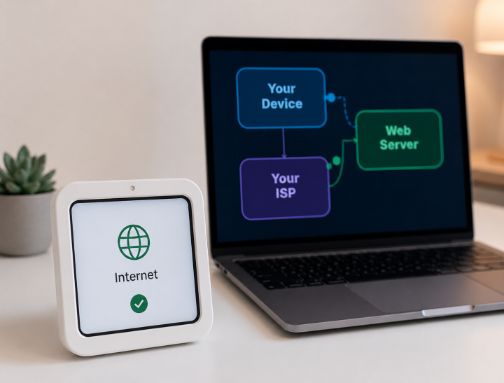
Now your message leaves your phone and begins a journey. It first goes to the nearest server🖥️ A server is a super-powerful computer that receives, stores, and sends data. WhatsApp has thousands of them worldwide. — which is basically a giant computer that WhatsApp owns, sitting in a building far away.
↑ Watch your message travel from your phone → WhatsApp server → friend’s phone
How does the internet know WHERE to send your message? Every device on the internet has a unique address called an IP address🏠 An IP address is like a home address for your phone/computer on the internet. Example: 142.250.180.100 — that’s how devices find each other.. It’s like a home address — your message always knows where to go!
Your message might travel through underwater cables stretching across the ocean floor! There are over 400 submarine cables beneath our oceans — that’s how your Karachi message reaches London in under a second.
The message travels through routers📡 Routers are devices that direct internet traffic — like traffic police. They look at your message’s destination and point it the right way. — these are like traffic police of the internet, always pointing your message in the right direction.
🔐 Your Message is a Secret Code
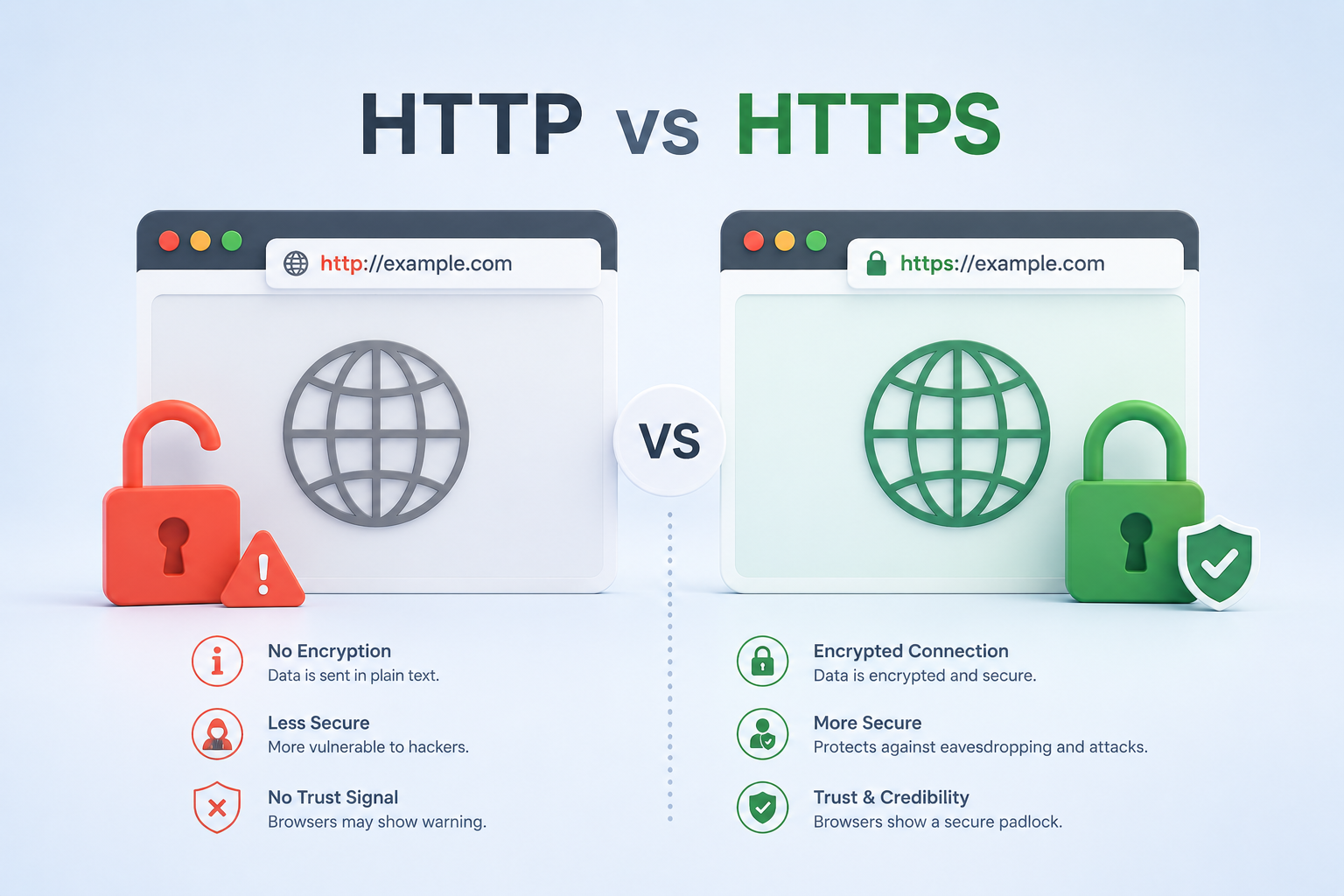
Here’s something really cool — WhatsApp uses end-to-end encryption🔐 End-to-end encryption means only you and your friend can read the message. Even WhatsApp itself cannot read it! It’s scrambled for everyone else.. This means your message is turned into a scrambled mess of letters and numbers before it leaves your phone — and only your friend’s phone knows how to unscramble it.
Imagine you and your friend have a special secret lock-and-key. You lock the message before sending. Only your friend’s key can unlock it. Even if someone grabs the message in the middle — all they see is garbage! This “key” is actually a super complex math formula. WhatsApp creates a unique key for every single conversation.
🖥️ WhatsApp’s Server Gets Your Message
Your message reaches WhatsApp’s data center🏢 A data center is a massive building full of thousands of powerful computers (servers). Companies like WhatsApp, Google, and Meta have many of these around the world to handle billions of messages. — a huge building full of computers working 24/7.
The server does a quick job:
The server looks up if your friend’s phone is currently connected to the internet.
The server pushes the message directly to your friend’s phone. Done in milliseconds!
The server holds your message safely (still encrypted). The moment your friend comes online — whoosh — it gets delivered instantly.
That’s about 1.15 million messages every second. WhatsApp’s servers are some of the busiest computers on Earth.
📲 Your Friend’s Phone Gets It
The message arrives at your friend’s phone, still in scrambled form. Now your friend’s phone uses its secret decryption key🗝️ A decryption key is the special code that unscrambles an encrypted message back to its original form. Only the intended receiver’s phone has this key. to unscramble it back to normal.
Then your friend’s phone does two things:
You hear the WhatsApp “ping” sound — that’s your friend’s phone waking up and showing the message on screen.
Your friend’s phone automatically tells WhatsApp’s server “Hey, I got the message!” — and that’s what turns your tick marks blue!
✓ ✓ The Mystery of the Tick Marks
Those little ticks tell you exactly where your message is in its journey. Now you’ll understand them completely!
Message is still in your phone, waiting to connect to the internet.
Message sent! WhatsApp’s server received it. But your friend hasn’t gotten it yet.
Message delivered to your friend’s phone. They haven’t opened the chat yet.
Your friend opened the chat and read the message. They’ve seen it!
The Whole Journey — In Under 1 Second!
Let’s zoom out and see the full story from start to finish:
The entire trip — from Karachi to London and back — can happen in about 200 milliseconds. For comparison, the blink of an eye takes about 400 milliseconds. Your message travels to another continent faster than you can blink.
Bonus: What if You Have No Internet?
If your internet goes off while you’re typing, WhatsApp doesn’t just give up. Your message goes into a queue — like a waiting line. The moment your internet comes back (even for a second), WhatsApp silently sends all your pending messages.
Message is saved locally on your phone with a clock icon ⏰
WhatsApp automatically detects it and sends all waiting messages immediately.
🎉 Now You Know!
Every WhatsApp message goes through this incredible journey:
All of this happens in less time than it takes to blink your eyes. Technology is truly magical — and now you understand exactly how it works! 🙌